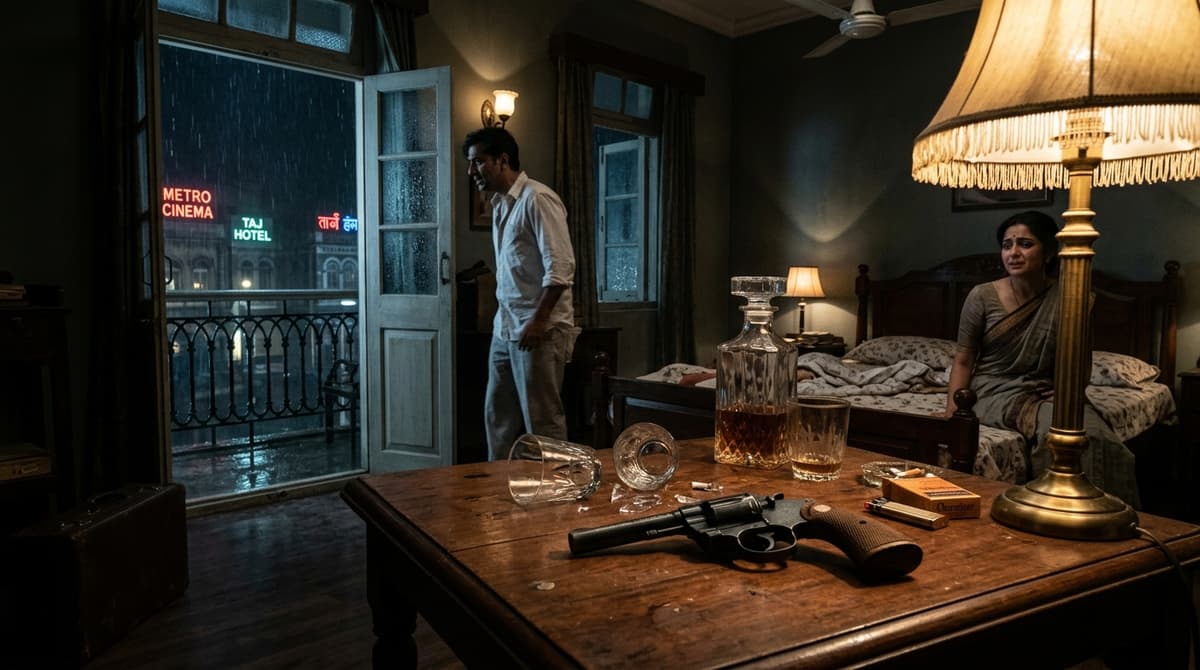
Three shots in a Bombay bedroom.
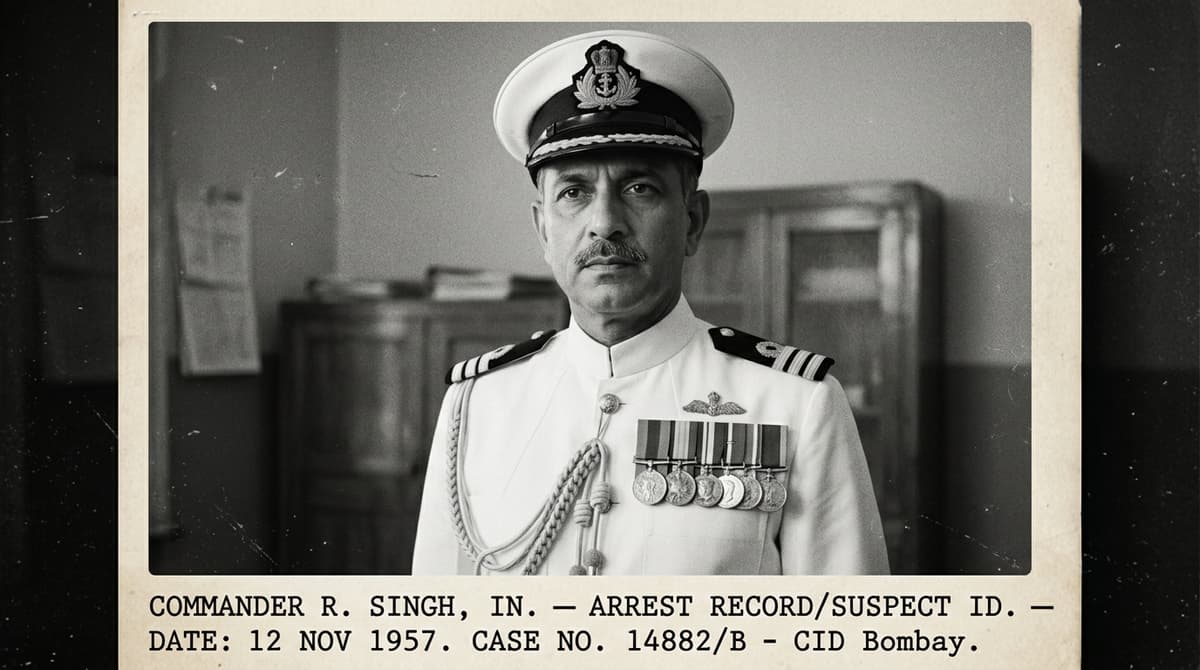
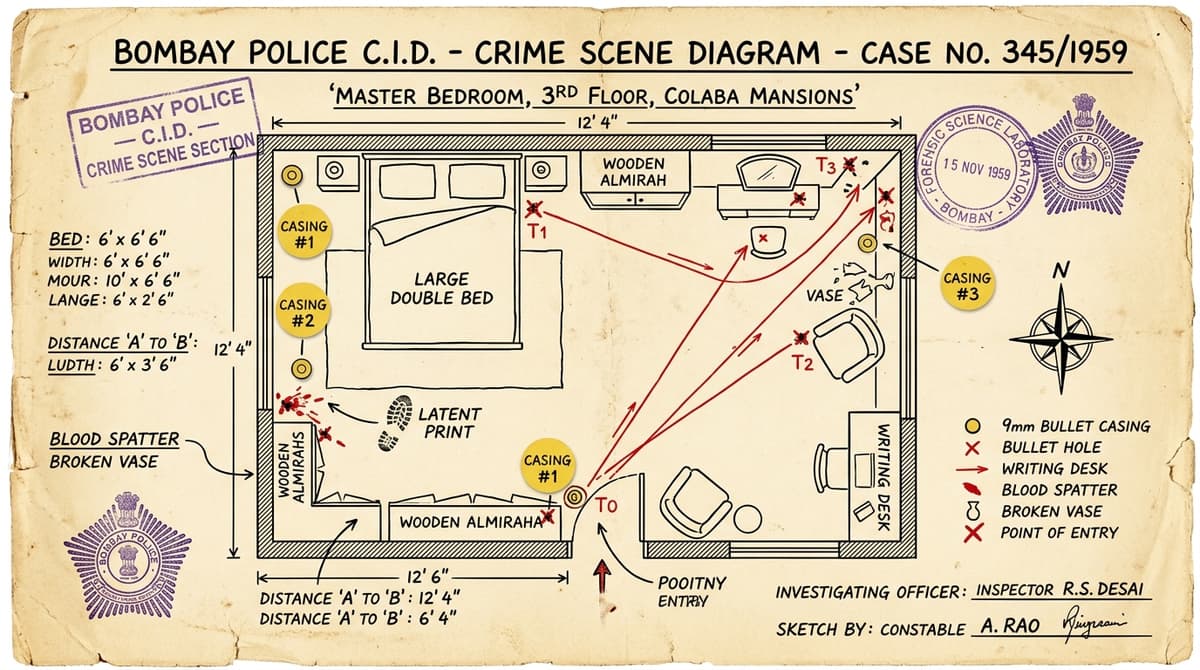
27 April 1959, 4:30 PM. Commander Kawas Manekshaw Nanavati walked into Prem Ahuja’s bedroom at Jeevan Jyot apartments in Colaba, Bombay. Moments later, three shots rang out. Ahuja lay dead in a puddle of blood.
"Three bullets in a Bombay bedroom. The sensational trial that killed the jury system in India forever."

27 April 1959, 4:30 PM. Commander Kawas Manekshaw Nanavati walked into Prem Ahuja’s bedroom at Jeevan Jyot apartments in Colaba, Bombay. Moments later, three shots rang out. Ahuja lay dead in a puddle of blood.

The three lives entangled in India’s most sensational love triangle and legal saga.
At 1:30 PM, Sylvia broke down and confessed her affair to Nanavati. Nanavati drove his wife and children to the Metro Cinema for a 4:00 PM movie. He then drove to his naval ship INS Mysore, requisitioned a .38 service revolver and 6 rounds under a false pretext, and drove straight to Ahuja’s office and then his home.

Nanavati claimed that when he confronted Ahuja, Ahuja said: "Am I to marry every woman I sleep with?" A physical struggle ensued and the gun went off accidentally.
The trial at the Sessions Court gripped all of India. The tabloid *Blitz* ran front-page campaigns portraying Nanavati as a patriotic officer defending his family honor.
Put yourself in the shoes of the 9-member jury in the Bombay Sessions Court in 1959. What verdict would you cast?
Did the 3-hour interval between Sylvia’s confession and the shooting provide sufficient "cooling time" to defeat the claim of sudden provocation?
The 9-member jury had acquitted Nanavati by an 8-1 majority. But Sessions Judge Mehta found the verdict perverse and referred it to the Bombay High Court. The High Court overturned the jury verdict, finding Nanavati guilty of murder under Section 302 IPC and sentencing him to life imprisonment. The Supreme Court dismissed his appeal in 1961.
Justice K. Subba Rao laid down the landmark 4-part test for Grave & Sudden Provocation: 1. The provocation must be grave and sudden. 2. The test is objective: would a reasonable person lose self-control? 3. Words and gestures can constitute provocation only in exceptional cases. 4. The fatal act must be committed before cooling time has elapsed. Public outrage over jury bias in this case led Parliament to abolish jury trials in India in the 1973 CrPC.
Supreme Court holds that lapse of time between provocation and act destroys Exception 1 of Section 300.
Jury trials abolished in India following the controversial jury verdict.
Principle codified and preserved under BNS Section 101 Exception 1.
Join 14,000+ advocates, law students, and curious citizens reading certified Indian court stories.

A midnight killing in an abandoned aerodrome. Can an honest belief in ghosts save a man from the gallows?

The 68-day marathon trial by 13 Supreme Court judges that saved the Indian Constitution from tyranny.
Pleadings is dedicated to 100% legal accuracy. Found an error in this case record?