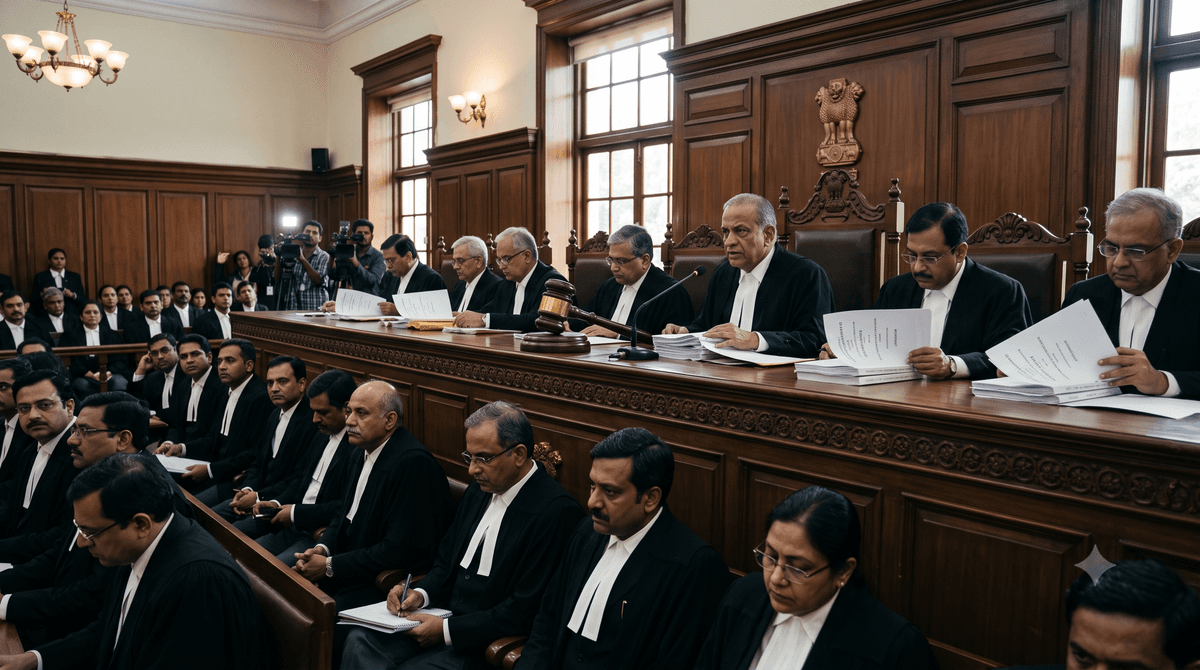
Justice K.S. Puttaswamy (Retd.) & Anr. v. Union of India & Ors.: The Catalyst
Justice K.S. Puttaswamy (Retd.), a former judge, challenged the constitutional validity of the Aadhaar scheme and raised concerns regarding the collection and storage of personal and biometric information by the State. During the Aadhaar proceedings, a question arose as to whether the Constitution of India guarantees a fundamental right to privacy. The Union of India relied on earlier decisions, particularly M.P. Sharma v. Satish Chandra and Kharak Singh v. State of Uttar Pradesh, to question the existence of such a fundamental right. A nine-judge Constitution Bench of the Supreme Court was constituted to determine the constitutional status of privacy. On 24 August 2017, the Court unanimously held that the right to privacy is a constitutionally protected fundamental right, forming an intrinsic part of the right to life and personal liberty under Article 21 and also connected with the freedoms guaranteed under Part III of the Constitution. The Court also recognized informational privacy and held that any State interference with privacy must satisfy constitutional requirements including legality, legitimate State aim and proportionality.